

| DifficultyEasy | Total Time15 min | Prep Time15 min | Cook Time0 min |
| ServesVarious | Cost Per Serving~$2.50 | CaloriesN/A | Recipe TypeGuide |
This Mixing Bowl Guide helps home cooks choose the right bowls for their kitchen needs. Having the right mixing bowls makes cooking and baking more efficient.
From stainless steel to silicone, each material offers different benefits for various cooking tasks. This guide covers everything you need to know about selecting quality mixing bowls.
Why You’ll Love This Guide
- Complete Material Breakdown – Learn about stainless steel, glass, ceramic, plastic, and silicone options.
- Size Selection Made Easy – Find the perfect bowl sizes for your cooking needs.
- Feature Analysis – Understand which features matter most for different tasks.
- Budget-Friendly Options – Discover quality sets at various price points.
- Expert Recommendations – Get specific product suggestions for different cooking styles.
Complete Mixing Bowl Selection Guide
Everything you need to know about choosing the perfect mixing bowls for your kitchen.
What to Consider
- Material preferences and durability needs
- Kitchen storage space available
- Types of cooking you do most often
- Budget range for quality investment
- Essential features like non-slip bases
Selection Process
- Assess your needs. Consider what you cook and bake most often.
- Choose material. Pick based on durability and heat resistance needs.
- Select sizes. Get a variety that covers small prep to large mixing tasks.
- Check features. Look for non-slip bases and helpful additions like spouts.
- Compare sets. Find the best value for your budget and space.
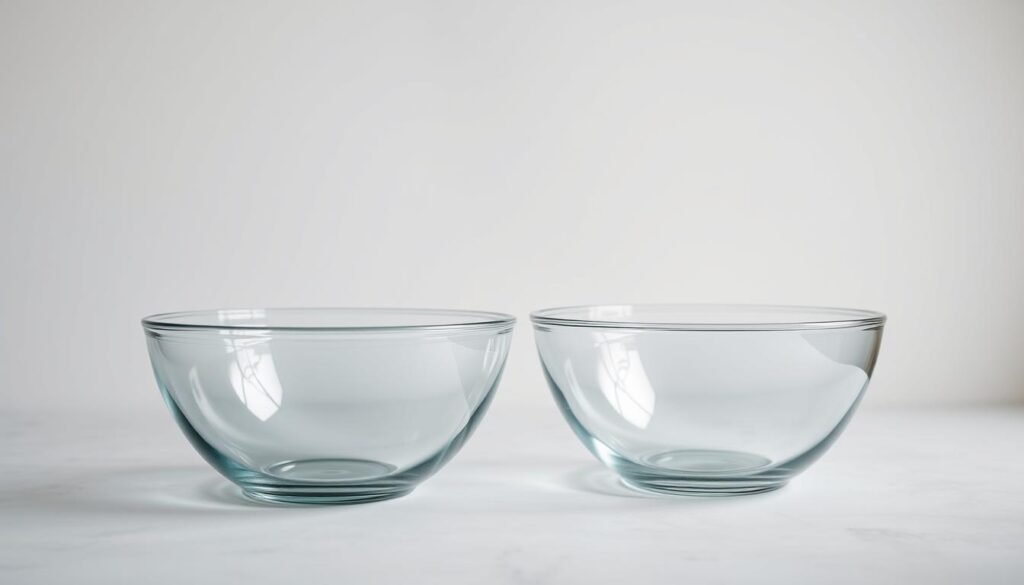
Mixing Bowl Guide for Home Kitchens
Quality mixing bowls are essential kitchen tools that make food preparation safer and more efficient. The right bowls provide stable surfaces for mixing, whipping, and combining ingredients.
Different materials and sizes serve specific purposes in cooking and baking. Understanding these differences helps you choose bowls that match your cooking style and kitchen needs.
Material Types and Benefits
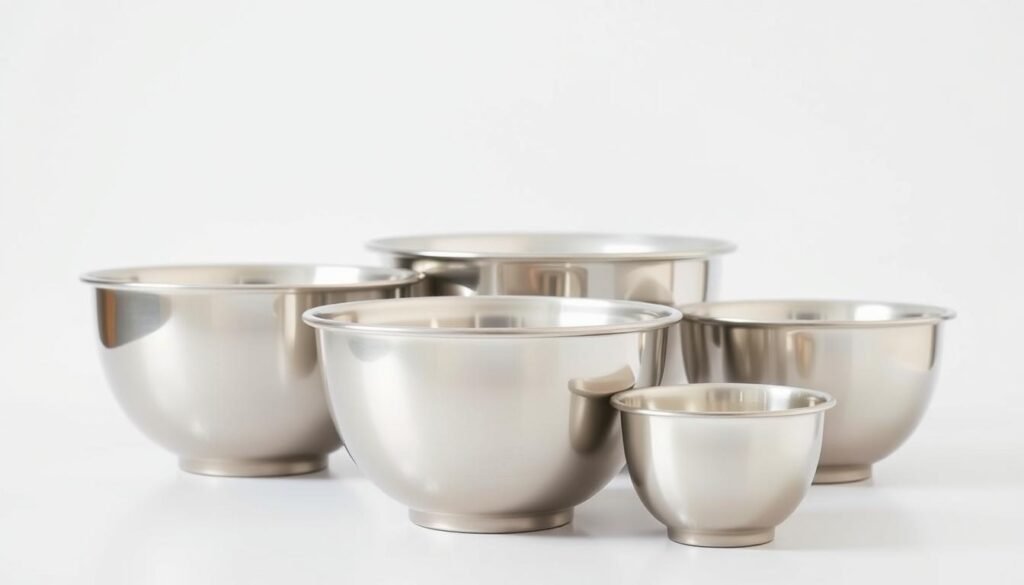
- Stainless Steel – Durable, non-reactive, dishwasher safe, handles temperature changes well
- Glass – Heat resistant, transparent for monitoring mixtures, won’t absorb odors or flavors
- Ceramic/Porcelain – Attractive for serving, heavy and stable, comes in decorative styles
- Plastic/Melamine – Lightweight, affordable, available in many colors and sizes
- Silicone – Flexible, collapsible for storage, non-stick surface, heat resistant
Size Selection Guidelines
- Small Bowls (1-2 Quarts) – Perfect for prep work, spice mixing, small ingredient portions
- Medium Bowls (3-4 Quarts) – Ideal for everyday tasks like beating eggs, mixing salads, whipping cream
- Large Bowls (5+ Quarts) – Best for batch cooking, bread dough, large salads, holiday baking
- Nested Sets – Space-saving option with multiple sizes that stack together
Essential Features to Look For
- Non-Slip Bases – Rubber or silicone bottoms prevent sliding during vigorous mixing
- Pouring Spouts – Make transferring batters and mixtures mess-free
- Measurement Markings – Interior lines help with accurate ingredient portions
- Handles – Provide secure grip for heavy mixtures and hot contents
- Lids – Allow for storage of prepped ingredients and leftovers
Best Uses by Task
- Baking and Dough – Stainless steel or glass bowls with non-slip bases work best for heavy mixing
- Salads and Presentation – Wide ceramic or glass bowls allow easy tossing and attractive serving
- Marinating – Non-reactive materials like glass or stainless steel won’t affect flavors
- Food Storage – Bowls with tight-fitting lids keep ingredients fresh in the refrigerator
- Microwave Use – Glass and ceramic bowls handle reheating safely without chemical concerns
Professional Kitchen Tips
Restaurant kitchens rely on specific mixing bowl strategies that home cooks can adopt.
- Keep bowls at room temperature before mixing cold ingredients to prevent thermal shock.
- Use metal bowls for whipping cream – they chill faster and create better volume.
- Choose wide, shallow bowls for folding delicate batters to minimize deflation.
- Place a damp towel under bowls to create extra stability on smooth countertops.
Material Comparisons
Stainless Steel – Most durable option that resists dents, scratches, and stains while handling both hot and cold foods safely.
Glass – Borosilicate glass offers superior heat resistance and allows you to see mixing progress clearly.
Ceramic – Heavy weight provides natural stability but can chip or crack with heavy use.
Silicone – Flexible material that’s heat resistant up to 450 degrees F and stores compactly.
Size and Storage Solutions
Small Kitchen Strategy – Choose nested sets that stack efficiently or collapsible silicone bowls to maximize cabinet space.
Large Kitchen Benefits – Multiple dedicated sizes allow for simultaneous prep of different recipe components.
Mixed Material Sets – Combining different materials gives you options for specific tasks while keeping costs reasonable.
Feature Priorities
Non-Slip Bases – Rubber rings or silicone bottoms prevent dangerous sliding when mixing thick doughs or beating ingredients.
Pour Spouts – Molded lips or separate spout attachments make transferring batters clean and precise.
Measurement Lines – Interior markings reduce the need for separate measuring cups during recipe preparation.
Handles and Grips – Side handles or textured exteriors provide secure hold when moving heavy or hot contents.
Estimated Cost Per Set
- Budget plastic set (3 pieces) – ~$15.00
- Mid-range stainless steel set (5 pieces) – ~$35.00
- Premium glass set with lids – ~$65.00
- Professional stainless steel set – ~$85.00
Total investment range: ~$15-$85 depending on material and features.
Prices are estimates based on average US retail costs and will vary by brand and retailer location.
Maintenance and Care
Most mixing bowls are dishwasher safe, but hand washing extends their lifespan significantly. Stainless steel and glass handle high heat washing cycles without damage.
Avoid abrasive cleaners on all materials to prevent scratching surfaces. Check FDA food safety guidelines for proper cleaning standards.
What to Use With Your Mixing Bowls
Quality mixing bowls pair perfectly with silicone spatulas for gentle folding and stainless steel whisks for effective beating. Digital kitchen scales work well with bowls that have measurement markings.
Consider adding bowl covers or plastic wrap for temporary storage of mixed ingredients. Stand mixers complement large mixing bowls for heavy-duty tasks like bread dough.
Recommended Kitchen Gear
* As an Amazon Associate I earn from qualifying purchases at no extra cost to you.
Frequently Asked Questions
What are the benefits of using stainless steel mixing bowls?
Stainless steel mixing bowls are tough, versatile, and don’t rust. They’re loved by both pros and home cooks.
Are glass mixing bowls suitable for high-temperature cooking?
Yes, glass mixing bowls can handle hot cooking. But always check if they’re safe for the oven.
What size mixing bowl is ideal for everyday cooking tasks?
A medium bowl (3-4 quarts) is perfect for daily tasks. It’s great for mixing salads, whipping cream, or beating eggs.
Can I use plastic mixing bowls for baking?
Plastic bowls are light and easy to store. But they might not be the best for baking. They can scratch or crack easily. Stainless steel or glass bowls are better for baking.
What are the advantages of using nested mixing bowl sets?
Nested bowl sets save space and are easy to store. They’re great for small kitchens or for those who need many bowls.
Are non-slip mixing bowls worth the investment?
Yes, non-slip bowls are stable and prevent slipping. They’re a good buy for home cooks and bakers.
Can I use silicone mixing bowls for food storage?
Yes, silicone bowls are flexible, airtight, and good for storing food. They’re also easy to clean and dishwasher-safe.
What features should I look for when buying a mixing bowl set?
Look for material, size, non-slip base, spouts, lids, and markings. Make sure the set fits your cooking needs.
Are microwave-safe mixing bowls safe to use in the oven?
Not always. Some microwave-safe bowls might be oven-safe. Always check the manufacturer’s specs for oven safety. This Mixing Bowl Guide covers all the essential information for making the right choice.
Want to save this for later? Pin it!


From beginner-friendly tips to no-fuss dessert ideas, Ryan is all about helping people enjoy baking and treat-making without the stress. Whether you’re whipping up something for a party or just craving something sweet, Ryan’s practical approach makes it easy to create desserts that taste great and don’t take all day.