

| DifficultyEasy | Total Time15 min | Prep Time15 min | Cook Time0 min |
| ServesN/A | Cost Per Serving~$25-75 | CaloriesN/A | Recipe TypeGuide |
This Best Cake Pan Selection Guide helps you choose the right pan for perfect layers every time. Understanding pan materials, sizes, and features makes all the difference in your baking results.
The right cake pan affects texture, browning, and structure. With so many options available, knowing what to look for saves time and improves your cakes.
Why You’ll Love This Guide
- Material Breakdown – Clear comparison of aluminum, silicone, glass, and steel options.
- Size Guidance – How to match pan dimensions to your recipe needs.
- Feature Focus – Non-stick coatings, removable bottoms, and edge designs explained.
- Quality Tips – What to check before buying any cake pan.
- Budget Options – Professional-grade versus budget-friendly recommendations.
Best Cake Pan Selection Guide
Complete guide to choosing the perfect cake pan for professional results at home.
Key Considerations
- Material type (aluminum, silicone, glass, steel)
- Pan size and shape for your recipes
- Non-stick coating quality
- Edge design (straight vs. sloped sides)
- Weight and thickness for durability
- Brand reputation and warranty
Selection Steps
- Assess your baking needs. Determine what types of cakes you make most often.
- Choose material. Aluminum for heat conductivity, silicone for easy release.
- Select size. Match pan dimensions to your favorite recipes.
- Check quality. Look for thickness, weight, and construction details.
- Consider features. Non-stick coatings, removable bottoms, straight sides.
- Set budget. Decide between professional-grade and budget-friendly options.
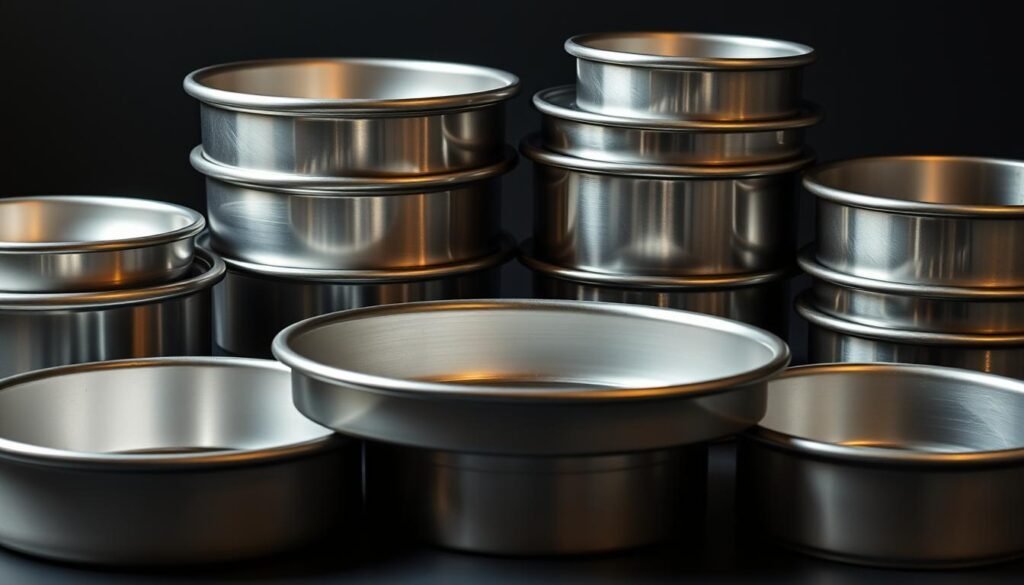
Best Cake Pan Selection Guide
Choosing the right cake pan affects every aspect of your baking results. Professional bakers understand that pan selection is as important as recipe ingredients.
Understanding Different Pan Materials
Aluminum pans are the professional standard for their superior heat conductivity. They distribute heat evenly, preventing hot spots that cause uneven browning.
Light aluminum reflects heat for gentler baking, while dark aluminum absorbs heat for faster browning. Choose based on your desired results.
Silicone pans offer flexibility and natural non-stick properties. They work best for delicate cakes that need easy release but may not brown as well as metal pans.
Glass and ceramic pans heat slowly and retain heat longer. They can cause over-browning on the bottom while the top stays pale.
Steel pans are durable but can warp at high temperatures. They work well for everyday baking but aren’t ideal for delicate layer cakes.
Selecting the Right Size and Shape
Round pans in 6-inch, 8-inch, and 9-inch sizes are standard for layer cakes. The size affects baking time and cake thickness.
Using a pan too small makes the batter overflow. Using a pan too large creates thin, overcooked layers.
Square and rectangular pans work well for sheet cakes, brownies, and bars. They require different baking times than round pans of similar volume.
Specialty shapes like Bundt, loaf, and sheet pans serve specific purposes. Bundt pans create decorative ring cakes while loaf pans work for pound cakes and quick breads.
Essential Features for Professional Results
Non-stick coatings make cake release easier but can wear out over time. High-quality coatings last longer and perform better than cheap versions.
Removable bottoms and springform designs allow easy release of delicate cakes. They’re essential for cheesecakes and tortes that can’t be turned upside down.
Straight-sided pans create layers that stack evenly for professional-looking cakes. Sloped sides make release easier but require leveling for neat layers.
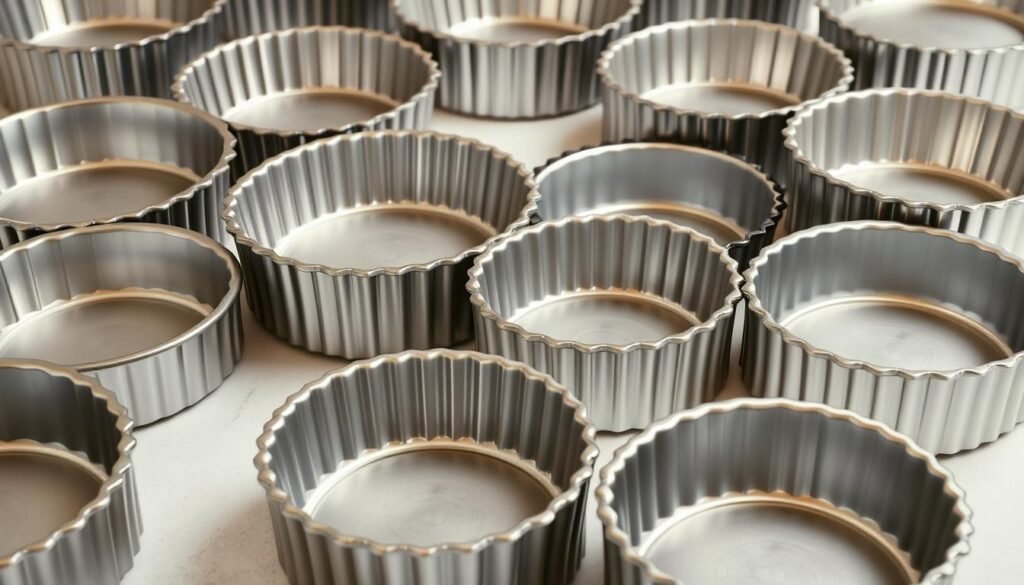
Quality Evaluation Tips
Weight and thickness indicate quality construction. Pans should be at least 1.5mm thick to resist warping in high heat.
Heavier pans generally distribute heat more evenly than lightweight versions.
Construction details matter for durability. Look for reinforced bottoms, sturdy handles, and corrosion-resistant materials.
Quality non-stick coatings should feel smooth and even across the entire surface.
Pan Material Selection Tips
Different materials work better for specific cake types.
- Use aluminum for layer cakes that need even browning.
- Choose silicone for intricate molded cakes with fine details.
- Pick glass for cakes you want to monitor while baking.
- Select steel for everyday sheet cakes and brownies.
Brand Recommendations and Budget Options
Professional-grade brands like Calphalon, All-Clad, and Anolon offer superior performance but cost more. They’re worth the investment for serious bakers.
Budget-friendly options from Wilton and Chicago Metallic work well for occasional baking. They cost $10-30 compared to $60-100+ for professional pans.
Pan Size Matching Guide
6-inch pans work for small cakes serving 2-4 people. They’re perfect for testing new recipes or making personal-sized cakes.
8-inch pans are the most versatile size for home baking. Most recipes are designed for this standard size.
9-inch pans create larger layers for crowd-sized cakes. They need slightly longer baking times than 8-inch pans.
Care and Maintenance Guidelines
Non-stick pans require gentle handling to preserve their coating. Use plastic or wooden utensils and avoid abrasive cleaners.
Aluminum pans can discolor but this doesn’t affect performance. Hand washing prevents dishwasher damage to both the pan and non-stick coating.
Estimated Cost Per Pan
- Budget aluminum pans – ~$10-15
- Mid-range non-stick pans – ~$20-35
- Professional aluminum pans – ~$30-50
- Premium springform pans – ~$40-75
- Silicone specialty pans – ~$15-30
Total for basic set of 3 pans: ~$45-90 – varies by brand and features.
Prices are estimates based on average US retail costs and will vary by location and brand.
How to Store and Care for Cake Pans
Store cake pans in a dry place to prevent rust and corrosion. Stack them with protective padding to avoid scratches on non-stick surfaces.
Clean pans immediately after use to prevent stuck-on residue. Check the FDA food storage guidelines for kitchen equipment care recommendations.
What Baking Tools to Pair With Your Cake Pans
Quality measuring tools ensure accurate batter amounts for each pan size. Digital scales work better than measuring cups for consistent results.
Offset spatulas help spread batter evenly in pans and remove finished cakes without damage. Wire cooling racks prevent soggy bottoms on freshly baked layers.
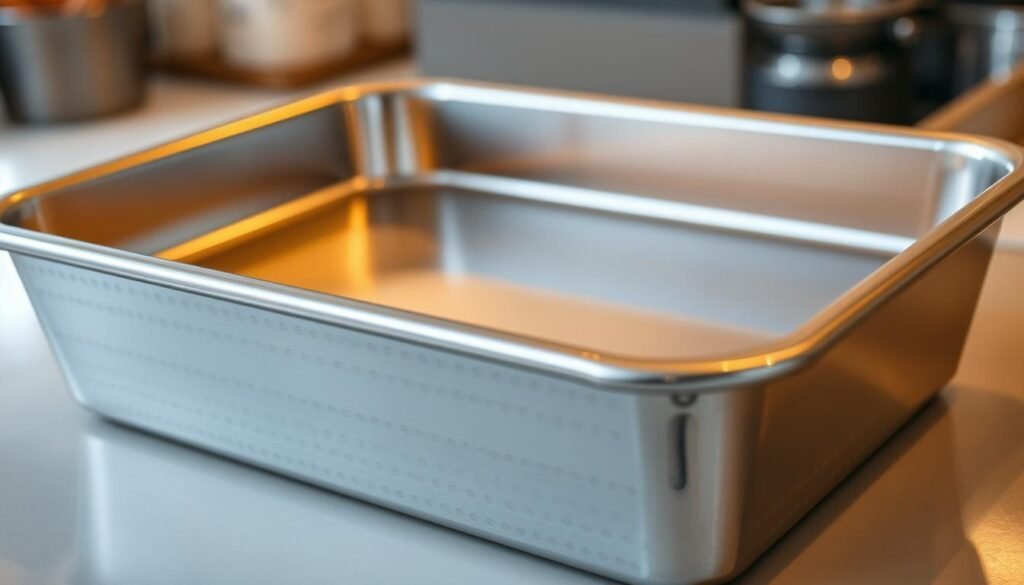
Recommended Kitchen Gear
* As an Amazon Associate I earn from qualifying purchases at no extra cost to you.
Frequently Asked Questions
What is the best material for a cake pan?
The best material depends on the cake type, but aluminum is often the top choice for its heat conductivity and durability. Nordic Ware Natural Aluminum Commercial Round Layer Cake Pan is highly recommended.
What are the benefits of using a non-stick cake pan?
Non-stick pans make cake release easy and reduce damage risk. However, their coating can wear off over time, so choose a high-quality non-stick pan for best results.
How do I choose the right size cake pan for my recipe?
Choose a pan size based on your recipe requirements and desired cake size. Standard round pans are common for layer cakes, while square and rectangular pans work for other types.
What are the advantages of using a silicone cake pan?
Silicone pans are flexible and provide easy release, making them great for delicate cakes. However, they may not conduct heat as well as other materials.
How important is the edge design of a cake pan?
The edge design affects layer stacking and release significantly. Straight-sided pans are best for layer cakes, while sloped-sided pans work better for other types.
What should I consider when evaluating the quality of a cake pan?
Look at weight, thickness, construction, and durability when evaluating quality. Professional-grade pans usually perform better and last longer.
Are budget-friendly cake pans worth considering?
Budget pans can be a good starting point, but they may not match professional pans in performance and durability. Consider your baking needs before choosing.
Can I use a glass or ceramic cake pan for layer cakes?
Glass and ceramic pans can work for baking, but they’re not ideal for layer cakes. They may cause uneven browning and heat distribution issues.
What are the benefits of a removable bottom or springform cake pan?
Removable bottom and springform pans make cake release easy and reduce damage risk. They’re especially great for delicate or complex cake designs.
How do I care for and maintain my cake pans?
Follow the manufacturer’s care instructions to keep your pans in good shape. Avoid metal utensils, don’t use harsh cleaners, and store them properly. The Best Cake Pan Selection Guide helps you make informed choices for long-lasting results.
Want to save this for later? Pin it!


From beginner-friendly tips to no-fuss dessert ideas, Ryan is all about helping people enjoy baking and treat-making without the stress. Whether you’re whipping up something for a party or just craving something sweet, Ryan’s practical approach makes it easy to create desserts that taste great and don’t take all day.